
Upcoming Workshops
All workshops below are tagged with colored shapes corresponding to the major thematic research areas of NIMLAS. Specific critical topics for future research that the particular product within each area is addressing are provided in text next to the colored shapes.
Data collection methods for improving representation
Addressing increasing attrition rates
New measurement technologies
Consent to additional data collection
Improving measurement in longitudinal studies of aging
Practical Large Language Models (LLMs) for Social Science Research: A Hands-On Introduction for Working with Text, Survey, and Unstructured Data
This workshop will be 100% remote. The Zoom link is forthcoming.
Thursday, July 9, 2026, 12:00 pm EST
Jinseok Kim
Abstract:
Large Language Models (LLMs) are transforming how researchers analyze, interpret, and generate insights from text and other unstructured data. However, many social scientists remain uncertain about how these tools work, when they should be used, and how to evaluate their outputs critically. This hands-on workshop provides an accessible introduction to LLMs for social science researchers with little or no programming experience. Rather than focusing on mathematical foundations or complex algorithms, the workshop emphasizes practical understanding and application. Participants will learn the core concepts behind LLMs, their capabilities and limitations, common pitfalls, and situations where traditional machine learning approaches may still be preferable.
Through guided demonstrations and interactive exercises, participants will use open-source LLMs to perform common research tasks involving text, survey responses, interviews, open-ended questionnaire data, and other forms of unstructured data. Participants will explore techniques for prompt design, model customization, and performance evaluation while comparing LLM-based approaches with traditional machine learning methods.
A key feature of the workshop is the use of open-source models that can later run directly on participants’ laptops or desktop computers without an internet connection. This approach enables researchers to apply what they learn from this workshop to working with sensitive or confidential data while maintaining privacy and data security. During the workshop, participants will receive step-by-step instructions for installing and configuring open-source LLMs on their own devices, along with practical templates for prompt engineering, evaluation checklists, and guidelines for selecting and assessing emerging models.
Speaker Bio:
Dr. Jinseok Kim is a Research Investigator and Lecturer III at the University of Michigan School of Information. His expertise includes machine learning, natural language processing, data quality, and large-scale text analytics. He has contributed to multiple NSF-funded projects applying AI and machine learning to scholarly, social, and administrative data. Dr. Kim teaches graduate courses on machine learning, NLP, and network analysis and specializes in making advanced AI methods accessible to non-technical audiences. His workshop focuses on practical, hands-on applications of open-source Large Language Models for social science research.
Agentic AI and Machine Learning ![]()

Measuring Disability and Functioning in Studies of Aging
This is a hybrid workshop. Zoom details will be shared with NIMLAS members prior to the event date. The workshop recording and related materials will be made available on our website 1-2 weeks after the workshop.
Thursday, October 8, 2026, 12-4 pm EST
ISR-Perry Building, Rooms G150A and G150B
Speakers
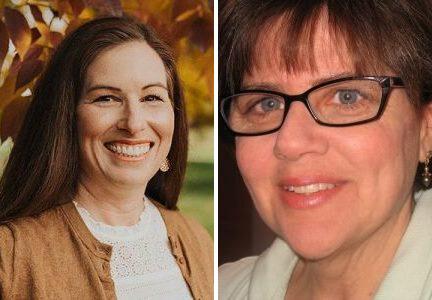
- Jody Schimmel Hyde, Research Scientist, Survey Research Center, Institute for Social Research
Ph.D. Economics, University of Michigan - Vicki A. Freedman, Research Professor, Survey Research Center, Institute for Social Research
Ph.D., Epidemiology, Yale University
Abstract:
This workshop will focus on measuring disability and functioning in longitudinal studies that include a focus on aging. The content is designed for researchers who are conducting or plan to conduct their own study and are interested in how to align measures of disability and functioning with their study aims. It might also be relevant for people using established national surveys of aging who are less familiar with measures of disability and functioning.
We will discuss the concepts of disability and functioning, and how the current prevailing conceptual models shape approaches to measurement in studies of aging. We will explore existing measures, their alignment, and the ways they do (and do not) capture the disability experience. We will also discuss some important considerations in survey measurement, including mode effects, proxy responses, and novel ways of assessing disability and functioning. The workshop will end with a measurement clinic, where participants can solicit input on the measures of disability and functioning most appropriate for their survey design and research questions.
Differential Effectiveness of Measurement
, Measurement Error
, Interview Mode
, Proxy Measurement ![]()